November 5, 2026
How Geometric Pool Mosaics Are Shaping Dubai's Luxury Aquatic Design
By @getgeometricpoolmosaicsstore
A New Language for Water
Swimming pool design in the UAE has moved beyond the simple blue tiled rectangle. The shift is visible in the recent wave of villa renovations and new-build projects across Dubai and Abu Dhabi. Homeowners and designers are now looking for surfaces that do more than just hold water. They want a finish that creates a visual experience, one that works with the light and the architecture of the space. This is where geometric pool mosaics come into their own. By combining precise patterns with reflective materials, these installations turn a pool into a centerpiece of the outdoor living area.
The appeal is not just aesthetic. A well-designed mosaic surface can also improve the perceived depth and clarity of the water, and it can tie the pool area to the landscaping and hardscaping around it. For anyone planning a bespoke swimming pool in the region, understanding the materials and techniques behind these geometric patterns is essential.
Why Geometry Works in Water
Straight lines, repeating angles, and ordered tessellations might seem like a strict choice for a fluid environment, but that contrast is exactly what makes the effect so striking. When you use geometric pool mosaics, you introduce a sense of structure and intention that reads clearly from above and from the waterline. The human eye is drawn to order, especially when it is set against the natural movement of water. The patterns break up the surface visually, creating a layered look that changes as the sun moves across the sky.
This approach is not limited to modern architecture. Even in more classical villa designs, a subtle geometric border or a central medallion can add a level of detail that feels curated rather than generic. The key is to match the scale of the pattern to the size of the pool. A small lap pool can handle a dense, intricate motif, while a large freeform family pool usually benefits from larger tiles and bolder geometry that does not get lost in the expanse.

Materials That Make the Pattern
The choice of tile material determines how the geometry reads underwater. Vitreous glass mosaic is the most common pick for geometric pool mosaics in Dubai luxury properties, and for good reason. The glass reflects light from multiple angles, which gives the pattern depth even when the water is still. It also resists the chemical wear from chlorinated or saltwater systems far better than many natural alternatives. The color stays stable, and the surface does not etch over time.
For a different texture, many designers turn to smalti. This is the traditional hand-cut glass tile used in Italian mosaics for centuries. Smalti has a slight irregularity in the surface because each piece is cut by hand. That irregularity catches light in unpredictable ways, giving the pattern a living quality that machine-cut tiles cannot match. The trade-off is cost and installation time. Hand-cut tiles require a skilled mosaic artist to place each piece, and the waterproofing membrane underneath must be perfectly prepared before work begins.
Another option gaining traction in the UAE interior design world is the use of marble mosaic and onyx tiles within geometric layouts. These natural stone elements add a vein of luxury that glass alone cannot provide. Onyx, in particular, becomes translucent when backlit, and some pool designs now integrate LED lighting beneath the tile to make the geometry glow at night. The challenge with natural stone in a pool is porosity. Marble and onyx must be sealed with a specialized impregnator, and the grout used should be an epoxy grout to prevent moisture wicking behind the tile. This is not a material for a weekend DIY project. It demands professional mosaic installation and ongoing maintenance.
Gold leaf mosaic also appears in high-end aquatic design, usually as an accent within a larger geometric field. The gold does not tarnish in chlorinated water, and its reflective quality creates a warm shimmer that contrasts with the cool blues and greens of the surrounding glass tiles. It is expensive and requires careful handling, but for a statement piece in a major villa, nothing else produces the same effect.
Planning the Pattern
Before selecting tiles, you need to decide how the geometry will interact with the pool's shape. A rectangular pool offers the most straightforward canvas. You can run a grid pattern across the entire floor, then wrap it up the walls for a seamless look. Alternatively, you can create a central geometric motif on the floor and keep the walls in a solid color. Both approaches work, but the choice affects how the pattern reads from different viewpoints. Remember that water distorts and magnifies. A pattern that looks balanced on the dry floor will appear stretched or compressed once the pool is filled. It is wise to mock up a small section or use a digital rendering before committing to a full installation.
For freeform or curvilinear pools, geometric pool mosaics can be used as a border or as a series of island patterns. A repeated diamond or chevron border along the waterline draws the eye and defines the edge of the pool without fighting the organic shape of the basin. Some of the most successful installations I have seen in Dubai use a tight geometric pattern only in the shallow end or on the sun shelf, where it can be seen clearly from the lounge chairs. The deep end stays calm and monochrome, creating a visual balance.

Installation Considerations
Mosaic installation in a swimming pool is not the same as tiling a bathroom wall. The substrate must be perfectly flat and coated with a flexible waterproofing membrane. Any imperfection in the base will telegraph through small glass tiles, and it will ruin the precision of a geometric layout. The adhesive used must be suitable for continuous immersion, and the grout must be epoxy-based to resist staining and cracking. Epoxy grout is harder to work with than cement-based grout because it sets quickly and requires a thorough cleanup, but the durability is worth the effort.
One detail that often gets overlooked is the expansion joint. A pool shell expands and contracts with temperature changes and ground movement. If the mosaic is laid without a soft joint at the perimeter or at changes in plane, the tiles will eventually crack or pop loose. A good installer will plan for these movement joints and hide them within the pattern so they do not break the visual flow.
Glass beads are sometimes mixed into the grout or added as a separate accent within the pattern. They catch light in a different way than flat tiles, adding a sparkle that moves with the water. This is a subtle effect, but in the right setting it can elevate the finish from good to extraordinary.
Long-Term Care and Performance
Once the geometric pool mosaics are installed and the pool is filled, maintenance becomes a matter of water chemistry and gentle cleaning. Glass tiles are non-porous, so they do not harbor algae the way some natural stone surfaces can. The grout lines, however, are the weak point. Even with epoxy grout, mineral deposits can build up over time if the water is hard. Regular brushing and a balanced pH level will keep the lines crisp. Avoid using metal brushes or abrasive pads, as they can scratch the glass surface.
If the pool is being renovated, the existing shell must be assessed for structural soundness before any new tile goes down. A swimming pool renovation that includes a change from plaster to mosaic often requires adding a bonding layer and a new waterproofing membrane. This adds cost and time, but it ensures the new surface will last.
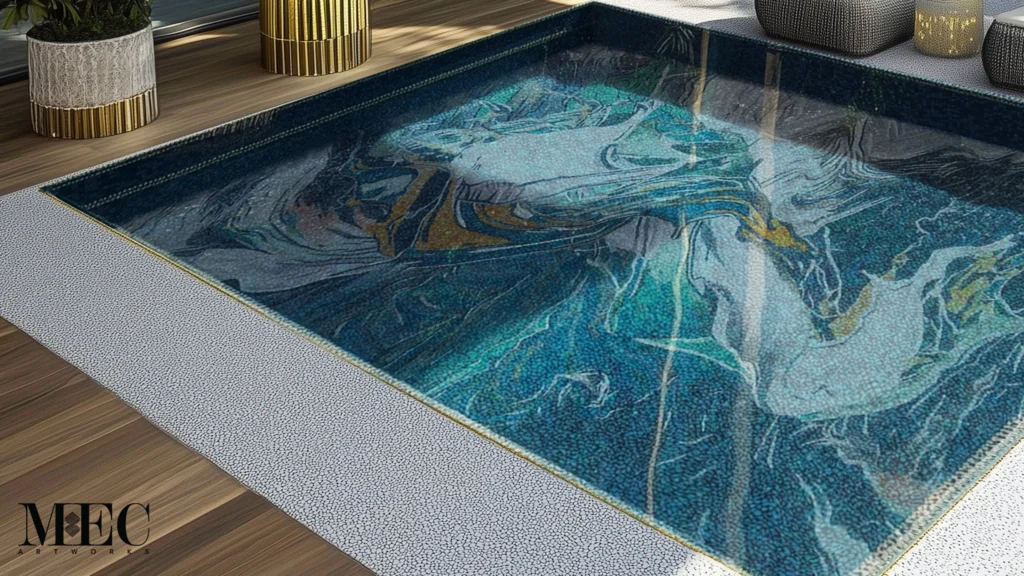
For those considering a 3D mosaic tile system, the effect can be dramatic. These tiles are shaped with raised surfaces that create a physical relief, not just a visual pattern. In a geometric layout, the raised facets catch side light and cast small shadows, adding another dimension to the design. The downsides are cost and cleaning. The raised surfaces can trap debris, and the installation requires even more precision to keep the relief pattern aligned across the whole pool.
Final Thoughts
Geometric pool mosaics offer a way to bring real artistry into a functional space. The combination of vitreous glass, smalti, natural stone, and even gold leaf gives designers a broad palette to work with, while the strict geometry provides the structure that makes the design read as intentional. For anyone building or renovating a luxury villa in the UAE, investing in a well-planned mosaic pattern is one of the most effective ways to make the pool feel like an integral part of the home rather than an afterthought. Work with a specialist who understands both the materials and the local climate, and the result will be a pool that looks as good underwater as it does from the terrace above.
❧